Friday, August 5, 2011

Thomson, B.  Chalk.  2010.  New York: Marshall Cavendish Children's Books.


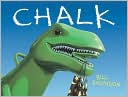
Chalk
Chalk by Bill Thomson is a amazingly illustrated picture book without words.  Three children head to the playground on a rainy day and find a bag of chalk.  One girl draws a sun and it stops raining.  The pictures the children create on the concrete come to life, providing hours of entertainment for the children.  Some entertainment is not so fun when the dinosaur drawn starts chasing them.  Kids will love this book because it will keep them interested in what amazing turn occurs next.  Chalk is an ALA Notable Children's Book for 2011.
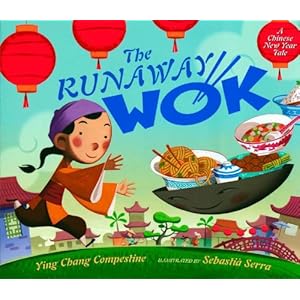
The Runaway Wok: A Chinese New Year TaleCompestine, Y.  The Runaway Wok: A Chinese New Year Tale.  2011.  New York:  Dutton Juvinile.

The Runaway Wok is a fantastic sort of folk tale which can be compared to the tale of Robin Hood.  In The Runaway Walk, the boy Ming trades his last egg for a wok which magically begins collecting wonderful items from the rich man's home.  Ming's family, in turn distributes items like food and toys to their community. The pictures are beautifully done and The Runaway Wok is a Notable Children's book for 2011.
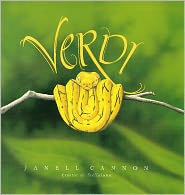
Canon, J.  Verdi.  1997.  New York:  Harcourt, Brace and Co.

Verdi is a beautifully illustrated picture book about a young yellow python that does not want to grow up to be a green and lazy adult python.  The book is mainly about self discovery and learning to love who you are.  Verdi tries hard, but he just cannot avoid growing up and he does so in spite of himself.  Verdi learns to slow down a bit as he grows and appreciate the beauty of nature.   Verdi won the Texas Bluebonnet Award in 1999.  
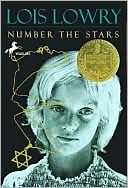
Lowery, L.  Number the Stars.  1989.  New York: Yearling.

Number the StarsLois Lowery's Number the Stars is another Newberry Award winning novel which centers on a young Jewish girl during the time of Holocaust in 1943 Denmark.  Annemarie Johansen and her family are in danger and are in hiding.  The story details their efforts to outsmart the Nazi's who are eradicating Jews from the country and has biblical ties to the Star of David.   
Lowery, L.  The Giver.  1993.  New York:  Bantam Books.

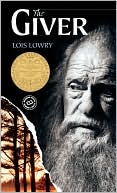
The Giver
The Giver by Lois Lowery is a notable book for children as well as a Newberry award winning novel.  The book is about a Utopian society that has adopted "sameness."  Everyone is devoid of feelings and your family and societal roles are determined by the elders.  Jonas is selected to be the new "the receiver" who is in charge of keeping the memories of society before sameness.  The Giver is commonly read at the middle school level and is a fantastic science fiction read.


O'Connor, J.  Fancy Nancy: Stellar Stargazer!  2011.  New York: HarperCollins.


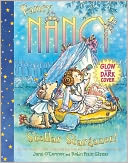
Fancy Nancy: Stellar Stargazer!
Jane O'Connor does it again with her newest book in the Fancy Nancy series, Stellar Stargazer!  This book is a New York Times bestseller and has a glow in the dark cover that kids love.  The aim of this book is to teach kids all about the planets, stars and constellations.  All of O'Connor's books do a great job of educating the reader by using higher level terms throughout the story and then defining those terms for the readers.  Parents will learn something too when they read these books!

London, J.  The Call of the Wild.  1903.  Canada: McMillan. 


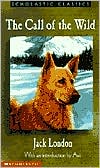
Call of the Wild
Jack London's The Call of the Wild is on the list of the 100 Most Challenged books, probably due to the death and violence depicted in London's story of the Alaskan wilderness.  The protagonist is Buck, a sled dog who is owned by several different people before answering the "call of the wild" and joining the wolves in the woods.  There is a lot of blood in this book due to fighting amongst the dogs and various owners of Buck dying.  Book is sometimes read in junior high. 


Blume, J.  Blubber. 1977.  New York: Random House.

Blubber book cover.jpg
Judy Blume's Blubber appears on the 100 Most Challenged book list due to bullying/tormenting that is portrayed throughout.  One of the girls is ostracized by the others and so is referred to as "blubber" by her classmates.  Blubber   tackles the topic of bulling, but like many things, the more attention a subject gets, the more we see of it.
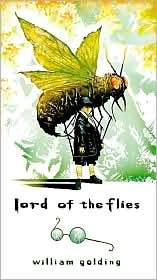
Golding, William.  Lord of the Flies.  1959.  New York: Penguin Group.

William Golding's Lord of the Flies is a compelling novel for young adults.  This book is typically read in high school and the story really hooks the reader.  Several boys are stranded on a desert island and since there is no civilization, the day to day lives of the main characters become a "survival of the fittest" situation.  The best lesson of this book is that someone will always step up to be in charge, and they definitely might not be looking our for you!  This book is on the Most Challenged list probably due to the civil disorder, violence and murder which takes place.


Hinton, S.E.  The Outsiders. 1967.  New York: Viking Press.

The Outsiders book.jpgS.E. Hinton's The Outsiders is on the list of most challenged books.  I can understand why due to the fighting, language and death.  However, The Outsiders is very spot on in it's portrayal of the "haves" and "have nots."  Many times, this book is read by middle schoolers and demonstrates what can happen when situations get out of control.  The screen version of this is one of my favorites and an interesting fact about this is that S.E. Hinton is a woman.


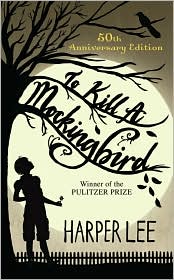
Lee, H.  To Kill a Mockingbird. 1960.  New York: Warner Books, Inc.


Harper Lee's Pulitzer Prize winning To Kill a Mockingbird is now a book read by many a high school student.  The book exceptionally portrays the racially divided South, and the young white girl Scout's experience as the daughter of the lawyer hired to defend an African American.  To Kill a Mockingbird is controversial and on the list of most challenged books, due to racialy charged language and the topics of sexual assault and murder.   
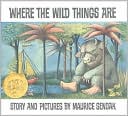
Sendak, M.  Where the Wild Things Are. 1963.  New York: HarperCollins Publishers.


Where the Wild Things AreWhere the Wild Things Are is a classic children's tale of Max, who when sent to his room by his mother with no supper, goes on a voyage to where the wild things are.  As Max's imagination grows, so do the wild things in the story.  The interesting fact to note is that we do not know if Max is awake and imagining the wild things, or if he was dreaming them.  The illustrations are also by Sendak and they make the story come alive.  My favorite picture is of Max on the boat with the beautiful midnight blue sky in the background. 

Thursday, August 4, 2011

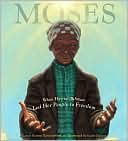
Weatherford, C.  Moses: When Harriet Tubman Led her People to Freedom.  New York:  Hyperion Books for Children.

Moses: When Harriet Tubman Led Her People to Freedom
Moses: When Harriet Tubman Led her People to Freedom is a Coretta Scott King Award winner.  It is beautifully illustrated and fictionally details Tubman's struggle to free African American slaves.  In the book, Tubman has coversations with God who tells her that she and all slaves should be free.  Tubman leaves her family with the odds tremendously stacked against her, heads North and begins the underground railroad.

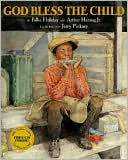
Holiday, B. and Herzog, A.  God Bless the Child.  1941.   New York:  HarperCollins.

God Bless the ChildGod Bless the Child is a picture book based on the song written by Billie Holiday and is a Coretta Scott King Honor book.   The illustrations are vivid as it shows an African American sharecropping family moving from their house in the country/on a plantation, to a new home in the city during The Great Migration of the 1930s.  The book is mainly about everyone "getting their own" piece of the American dream- kids included- in a society that values hard work.
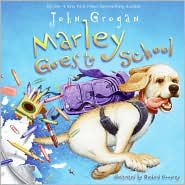
Grogan, J.  Marley Goes to School.  2009.  New York:  Harper Collins Publishers.

Marley Goes to School is written by John Grogan and it is a New York Times bestseller.  Seems it is hard to go wrong with dog books!  Marley follows her owner Cassie to school and gets in tons of trouble...from the gym coach, to the science teacher, to the music teacher, to the principal!  Marley finally finds Cassie just about the time Cassie's parents show up to take him home!  Very entertaining book with beautiful illustrations.

Tuesday, July 19, 2011

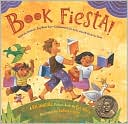
Mora, P.  (2009).  Book Fiesta!: Celebrate Children’s Day/Book Day.  New York, NY: HarperCollins Publishers.

Pura Belpre Award for Illustration, 2010.

Book Fiesta! does not follow traditional plot lines.


Book Fiesta!: Celebrate Children's Day/Book Day; Celebremos El dia de los ninos/El dia de los librosIn the picture book, Book Fiesta! we find a story promoting reading and Children’s Book Day which is April 30.  Book Fiesta is written in both Spanish and English and it reminds us to read everywhere- planes, trains and automobiles, and to read with everyone- moms, dads, sisters and brothers.  The book has fantastically beautiful illustrations created by Rafael Lopez portraying all types of children reading all types of books all over the place.
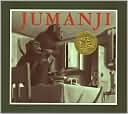
Van Allsburg, C.  (1981).  Jumanji.  New York, NY: Houghton Mifflin Co.

Caldecott Winner, 1982.

Exposition:  In Jumanji, we meet kids Judy and Peter who are left home alone while their parents go out.  They find a game called Jumanji in the woods.  The kids begin to play the safari game. 

 
JumanjiConflict:  The main conflict of Jumanji is that the game has come surprising alive, Judy and Peter know their parents would kill them if they could see what was going on in their beautiful home- not to mention that the animals now alive in their home are dangerous lions and snakes, a zookeeper and lots of monkeys.

Rising Action:  The rising action in this book is finding the game, reading the note that warns that they must read the directions carefully.  They find that the game cannot end until someone wins.

Climax:  The climax of Jumanji is the tense moments when deadly animals are in their home trying to get them and they are trying to finish the game and make them go away. 

Falling Action:  Judy wins the game and the animals magically disappear.

Resolution:  The children quickly dispense of the game in the woods.
                       
Chris Van Allsburg is well known for the amazing illustrations he has created in Jumanji and a myriad of other books.  The drawings are always pencil sketched and extremely detailed.


Yolen, J.  (1987).  Owl Moon.  New York, NY: Philomel Books.

Caldecott Winner, 1988.

Exposition:  In Owl Moon, we meet a boy and his father who are going “owling” one snowy dark evening in hopes of seeing the Great Horned Owl.

Owl MoonConflict:  The main conflict of Owl Moon is the pursuit of the owl.  They want to see him and he is hiding.  

Rising Action:  The rising action in this book is the journey into the forest and the pursuit of the owl.

Climax:  The climax of Owl Moon is when they lure the owl closer to them and he lands on a big branch, the father turns his flashlight on and they see the huge owl.

Falling Action:  The owl realizes that they are humans, not another owl, so he flies away.

Resolution:  The little boy has finally gone “owling” with his father and he is very proud of himself and proud that he saw the big owl.
                       
The illustrations in Owl Moon are vivid and beautiful.  The pictures are extremely detailed.

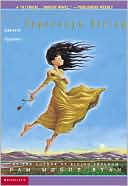
Esperanza RisingRyan, P.  (2000).  Esperanza Rising.  New York, NY:  Scholastic Press.

Pura Belpre’ Award, 2002.

Exposition:   Esperanza Rising is about 7 year old Esperanza Ortega who is the daughter of a rich Mexican landowner.   On her ranch, she has servants and a vineyard.   There are bands of traveling bandits who like to kill the rich landowners, even when they are kind like Esperanza’s father.  Her father is unfortunately murdered.  Esperanza and her mother flee to America after her mother turns down her Uncle’s wedding proposal.

Conflict:  The conflict in Esperanza Rising has to do with Esperanza and her mother learning to a make it in America.  They are hired to work in the fields and must work very hard to scrape by. 

Rising Action:  Esperanza’s mother falls ill with Valley Fever and Esperanza must work even harder to take care of her mother and save enough money to bring her grandmother to the U.S. to care for her mother.

Climax:  The climax of Esperanza Rising is when Esperanza’s grandmother arrives from Mexico.  Now Esperanza knows that everything will be turn out okay.

Falling Action:  Esperanza’s mother recovers from Valley Fever.

Resolution:  Esperanza, her mother and grandmother are together and they accept their new lives in America.
                       
Literary Qualities:  Foreshadowing is found in the beginning of the book when Esperanza cuts her finger on a rose bush- this foreshadows bad luck.  The theme of Esperanza Rising is her journey to overcome circumstances and rise above them.

Monday, July 18, 2011

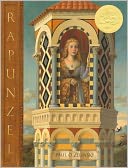
Zelinsky, P.  (1997).  Rapunzel.  New York, NY: Puffin Publishers.

Caldecott Winner, 1998.

Rapunzel
Exposition:  This version of Rapunzel is based on the fairy tale, but with some interesting new twists.  We start with a man and wife whose home window looks out to the sorceress compound.  The woman discovers she is pregnant after years of trying to become a mother.  The woman has a craving for the rapunzel herb that is growing in the sorceress’ garden.  She has her husband take more and more each day as she grows hungrier.

Conflict:  The main conflict in Rapunzel occurs when the sorceress observes that the herbs are being taken by the man, she curses him and tells him that she will take the child once it is born. 

Rising Action:  The rising action in this book is when Rapunzel is put into the tower in the woods.  She sings daily and soon attracts the attention of the prince who happens to be riding through the woods.

Climax:  The climax is when Rapunzel and the prince marry themselves in the tower, the prince then begins to stay there every night and soon Rapunzel is pregnant and the sorceress is furious.

Falling Action:  The prince is blinded by a fall and the sorceress takes him into the wood and leaves him there.  Rapunzel leaves the tower and soon delivers twins in the woods.

Resolution:  Rapunzel finds her prince in the woods and sings to him, relieving him of his blindness, the family then lives happily ever after.
                       
The illustrations created by Zelinsky for Rapunzel are amazingly detailed and intricate.  The pictures are beautiful and very realistic, I understand why it won the Caldecott Award, you feel as though you are there with them.
Field, R.  (1945).  A Prayer for a Child.  New York, NY:  HarperTrophy Publishers.

Caldecott Winner, 1945.

Plot does not fit the traditional plot line.  This is a prayer book with the prayer broken down line by line with an illustrated picture to accompany it.  This book was given to me as a child and I always loved the pictures, now I understand why.  The illustrations by Elizabeth Orton Jones are beautiful and remind you of the comforts of home and family.

Sunday, July 17, 2011

Creech, S.  (1994).  Walk Two Moons.  New York, NY:  HarperTrophy Publishers.

Children’s Notable Book, 1995.

Exposition:  Walk Two Moons is about Salamanca Tree Hiddle, a young girl searching for her mother.  She, her mother and father lived on a farm in Kentucky.  Her mother delivers a stillborn baby, becomes depressed and abandons Sal and her father leaving by bus. 

Conflict:  Sal is angry at her mother for leaving her.  In a tragic twist of events, her mother is killed when the bus she is riding in goes over a cliff in Idaho.  Sal’s father unfortunately decides to sell the farm, much to Sal’s dismay.  Secondary story line evolves around imaginary friend, Phoebe, also looking for her mother who has abandoned her family as well but for different reasons. 

Rising Action:  Sal takes a trip to Idaho with her grandparents and father to see the her mother’s accident site and visit her grave.

Climax:  Sal’s trip with her dad, gramps and gram take her the exact route her mother went.  She sees the accident site and grave and meets the woman who was sitting next to her mother on the trip who survived the accident.  Sal’s grandmother has a stroke.

Falling Action:  Sal’s grandmother dies.  Phoebe’s mother returns.

Resolution:  Sal is able to accept her mother’s death.  She, her father and grandfather live on the farm together.
                       
Literary Qualities:  One of the main qualities of this book is flashback.  Sal has many memories of her mother and they come back to her.  Common themes of selfishness, grief, reconciliation and forgiveness are prevalent in this book.
Spinelli, J.  (1990).  Maniac Magee.  New York, NY:  Little, Brown and Co.

Maniac Magee cover.jpgNewberry Award Winner, 1991.

Exposition:  Maniac Magee is about Jeffery Magee, AKA Maniac Magee because he is a maniac who can achieve amazing physical feats.  Maniac runs away from his aunt and uncle’s house and ends up in Two Mills, PA.  Two Mills is a city truly divided by Hector Street.  On the east end of Hector Street most black residents reside and on the west end of Hector Street most of the white residents reside.

 Conflict:  The main conflicts in Maniac Magee have to do with the town’s racism and Maniac’s homelessness.  He bounces from a black family, to staying at the zoo with one of the workers, to staying with a white family.

Rising Action:  The rising action in this book is Maniac’s searching for a home.  He meets Amanda Beale and is brought into a warm loving black family.  Maniac is white and doesn’t really look at skin color.  The other rising action is Maniac continuing to accomplish many amazing physical feats like winning a race running backwards.

Climax:  After the Beale’s deal with discrimination related to Maniac being in their home, Maniac decides they are better off without him, so he finds a family with Earl Grayson who works at the zoo, but Grayson dies and Maniac is alone again.
Falling Action:  Maniac goes to live with the white McNabb family, but the kids are allowed to run wild and Maniac finally accepts that he should be with the Beale's.

Resolution:  Maniac accepts that his home is with the Beale’s and aims to unite people in Two Mills, PA.

Literary Qualities:  Maniac Magee has a central underlying theme of trying to understand racial divide and overcoming racism.  Maniac Magee has a big personality (and the book is his namesake), so his characterization throughout is a central quality.
Collins, S.  (2008).  The Hunger Games.  New York, NY: Scholastic, Inc.

  Exposition:  The Hunger Games is about the new world Panem, which stands where North America once was.  In this new world, the Capitol controls everything and everyone.  Each year the capitol demonstrates it’s power through the annual Hunger Games.  Katniss, the main character lives with her mother and sister Prim.  Sixteen-year old Katniss has been the sole provider for her family since her father was killed in a mining accident.  She hunts daily with friend Gale and is sent to the  
 Hunger Games with Peeta who is the baker’s son.
                             
The Hunger Games (Hunger Games Series #1) Conflict:  Tributes are two kids randomly selected from each of the twelve districts fight to the death in this televised event.  Katniss volunteers for her sister since she is weaker than Katniss.  Katniss is in conflict with herself, as she must remind herself that although Peeta appears to be kind, he really is her enemy who must kill her or be killed himself.

Rising Action:  Katniss and Peeta head to the Capitol to represent District 12 in the Hunger Games.  Katniss and Peeta are sold to the televised crowd as boyfriend/girlfriend and this helps boost their popularity.  They attend training at the Capitol to get ready for the Hunger Games.  The rules of the game are altered allowing two tributes from the same district to win.

Climax:  The climax occurs when the rules of the game are changed again disallowing two tributes from the same district to win.  Next, Katniss and Peeta decide that a double suicide is the only way to go- and the rules are changed again to allow Katniss and Peeta to win.  

Falling Action:  Katniss and Peeta are told to continue to act like boyfriend/girlfriend in their closing interviews or face punishment by the Capitol.

Resolution:  This is the first book in the trilogy, so naturally they want you to read the others.  Katniss and Peeta return to District twelve and Katniss struggles with what she is feeling for Peeta.

Literary Elements:  Foreshadowing, there is a lot of background provided on the history of the games, previous winners and the element of impending doom in the beginning.  Imagery is provided through the descriptions of daily life in district twelve and the battles with tributes are vivid.


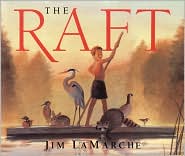
LaMarche, J.  (2000)  The Raft.  New York, NY: HarperCollins Publishers.

Bluebonnet Nominee 2002-2003.

Exposition:  The Raft is about a boy named Nicky whose Dad is working and unable to watch him over the summer.  Nicky has to spend the summer with his grandmother in a remote cottage near a river.  No television or other kids to play with.

Conflict:  Nicky fights back tears when told he has to go there for the summer.  Obviously, he does not want to go but his father has no other viable option.

Rising Action:  Nicky's grandmother gets him busy doing all types of work.  He discovers a raft with different types of animal drawings in it.  Nicky learns to navigate the river with grandma, who teaches him to use a pole in the four-foot deep water.

Climax:  The climax of the story is when Nicky uses the raft to navigate to a spot where a doe has gotten stuck in the mud.  Nicky rescues it, handily.  The wildlife have now gotten comfortable with Nicky as they have seen him going up and down the river daily.  

Falling Action:  After the doe is rescued, Nicky creates a picture of the doe on the raft and grandma helps him preserve the picture with oil paint.

Resolution:  Summer ends and school is to begin.  Before departing, Nicky's grandmother declares that now Nicky will always be a part of the river now like her.

Tuesday, July 12, 2011

Kann, V.  Silverlicious.  2011.  New York, HarperCollins Publishers.

New York Times Bestseller

Silverlicious
Exposition:  Pinkalicious has lost her sweet tooth and she writes her tooth fairy to try to get it back.

Conflict:  Pinkalicious receives several different types of candy from different tooth fairies.   Most of the candy she receives is not sweet, so she expresses her dislike of said candies.

Rising Action:  Pinkalicious is visited by a valentine tooth fairy, an Easter bunny fairy and a Christmas elf.  All leave candy that is not sweet enough for her sweet tooth.

Climax:  Finally, the Pinkalicious’ fairy Tootheetina shows up and brings Pinkalicious suitable candy.

Falling Action:  Pinkalicious writes to the other fairies and lets them know that she really did appreciate their candy gifts.

Resolution:  Pinkalicious gets her sweet tooth back.
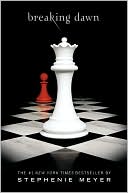
Breaking DawnMeyer, S. (2008).  Breaking Dawn.  New York:  Little, Brown and Co.

Exposition:  Breaking Dawn is the final installment in the Twilight series.  Bella and Edward are married and Bella becomes pregnant with Edward’s child, half human half vampire.  A large portion of the book deals with the pregnancy and delivery of the baby girl and another portion of the book deals with an impending fight over her future with other vampires.  The child is incorrectly thought to be an immortal child and since immortal children are uncontrollable, they are outlawed by the Volturri (the governing vampire body).

Conflict:  Bella becomes pregnant and decides to keep the baby, against Edward’s wishes.  Bella and Edward's child, the "incubus" Renesmee breaks Bella's bones and causes excessive bleeding that would have caused Bella to die, so Edward changes Bella to a vampire during childbirth.  Bella learns to control her blood thirst and the family prepares for a war with the Volturri over the child.

Rising Action:  Bella’s pregnancy; war preparations.

Climax:  Childbirth; showdown with Volturri.

Falling Action:  Growth of child, war.

Resolution:  Bella and Edward allowed to keep child and they live happily ever after.
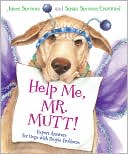
Stevens, J. and Crummel , S.  (2010).  Help Me, Mr. Mutt!  New York: Harcourt.

Texas Bluebonnet Book
Exposition: This book is about Canine Counselor Mr. Mutt who answers letters from dogs.  In the book there is also Queen Cat who chimes in with her opinion on letters dogs write to Mr. Mutt.

Help Me, Mr. Mutt!: Expert Answers for Dogs with People Problems 
Conflict:  No definite conflict per se.  Only “conflict” is dogs writing to Mr. Mutt explaining their “problems.”

Rising Action:  Mr. Mutt addresses a variety of questions and situations presented by dogs, from sleeping arrangements, being dressed up, barking, too many dog baths and not enough good food.

Climax: No real climax per se.

Falling Action:  Queen cat ties up Mr. Mutt for giving advice to dogs, dog chases cat, dog back in business answering letters at end.   

Resolution:  Dog continues career as canine counselor. 
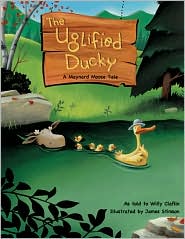
Clafin, W.  (2008).  The Uglified Duckling.  Atlanta:  August House Little Folk.
Texas Bluebonnet Book, 2011.

Exposition:  The story is about a moose that gets separated from his family and is adopted by a family of ducks.  The mother duck calls him an “uglified duckling” because he does not look or sound like her other chicks.

Conflict:  After having the moose around for a while, the mother duck finally takes him to the duck doctor who tells her the moose is her “uglified offspring.”

Rising Action:  The little chicks are ready to learn how to fly.  They go to a cliff to learn and the moose falls and hurts his nose.

Climax:  The climax of the story is when moose decides he is in fact an “uglified duckling” whose family has abandoned him, his nose is sore from the fall trying to fly and moose decides no one will ever love him and he wanders off into the woods.

Falling Action:  The moose wanders into the forest and finds a pond where he notices other moose.

Resolution:  Finds his moose family and finally realizes that he is a moose and being with his moose family is where he is supposed to be.